The FRA Long-Distance Rail Study is a significant initiative aimed at improving long-distance passenger rail service in the United States and connecting different parts of the country more effectively. Officially known as the “Amtrak Daily Long-Distance Service Study,” the Federal Railroad Administration (FRA) conducted the “Amtrak Daily Long-Distance Service Study” at the direction of the U.S. Congress.
The study’s primary objective was to determine which long-distance Amtrak services could be restored, where daily service could be expanded on existing routes, and which potential new routes could establish better rail connectivity between the nation’s large and small cities. This initiative was launched under Section 22214 of the Infrastructure Investment and Jobs Act (IIJA) of 2021. The FRA conducted the study between 2022 and 2024 and submitted its final report to Congress in January 2025.
What is the FRA Long-Distance Rail Study?
Simply put, it is a national-level study aimed at understanding the future of long-distance passenger rail service in the U.S. and identifying potential options for its expansion. By law, long-distance passenger rail refers to Amtrak routes that span more than 750 miles between their endpoints. The study specifically examined discontinued Amtrak long-distance routes or those without daily service. It also considered potential new long-distance routes, with a particular focus on historical routes that were operational in April 1971 but were not continued after Amtrak’s inception.
Why was this study necessary?
While the U.S. possesses an extensive passenger rail network, long-distance train service remains limited in many parts of the country. Some communities lack daily rail service, while certain historic rail connections have been completely discontinued. A key objective of the study was to provide better intercity transportation options, particularly for rural areas and smaller towns. According to the FRA, long-distance routes can play a vital role in connecting large and small communities, fostering economic and social development in rural regions, and enhancing the connectivity of the national passenger rail network.
What did the FRA evaluate in the study?
The FRA did not merely compile a list of old rail routes; it conducted a comprehensive assessment of potential services. This involved examining how well a route could connect large and small cities within a regional rail network, the benefits it could offer to rural communities, and how it could improve connectivity with the existing national rail network. Local and regional public support was also prioritized. In other words, the potential of a route was not viewed solely from a technical or transportation perspective; there was also an effort to understand the extent to which local communities desired such a service.
The Role of Public and Local Communities in Stakeholder Engagement
A key feature of this study was its stakeholder engagement. The FRA gathered input from a wide range of stakeholders, including Amtrak, states, transportation organizations, railroads, regional planning organizations, municipalities, communities, passenger rail organizations, and federally recognized Tribes. During the final study process, 24 regional working group meetings were held across 21 cities, and over 50,000 comments were received from stakeholders and the public. According to the FRA, these comments demonstrated strong support for long-distance services and passenger rail.
How important are long-distance Amtrak routes in the study?
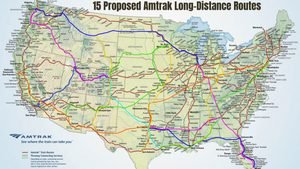
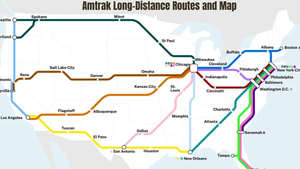
Today, Amtrak’s long-distance routes are a vital part of the U.S. passenger rail network. According to the FRA, Amtrak currently operates 15 long-distance routes—defined by law as routes exceeding 750 miles in length. These routes connect communities across 39 states and the District of Columbia, providing intercity transportation in many areas where other transport options may be limited. In Fiscal Year 2024, long-distance trains served more than 4.2 million passengers.
What did the final report reveal?
The FRA submitted the final report to Congress in January 2025. This report laid the groundwork for future planning regarding potential long-distance passenger rail services. It includes information on preferred route options for restored, enhanced, or expanded long-distance services; a prioritized inventory of key capital projects; potential costs and public benefits; and strategies for Amtrak to collaborate with communities. The report also examined potential federal and non-federal funding sources. This means that the study itself is not an immediate announcement to launch every proposed route; rather, it provides a crucial framework for future planning and decision-making.
What is the difference between the FRA and Amtrak?
To understand the FRA Long-Distance Rail Study, it is essential to distinguish between the FRA and Amtrak. The Federal Railroad Administration (FRA) is a federal agency within the U.S. Department of Transportation that plays a key role in railroad safety, policy, and infrastructure related to both passenger and freight rail. Amtrak, on the other hand, is a passenger rail corporation that operates intercity passenger train services across the United States. The FRA conducted this study at the direction of Congress, while Amtrak served as a key stakeholder throughout the process.
Why is this study important for America’s future?
The significance of the FRA Long-Distance Rail Study extends beyond merely increasing the number of trains. Improved long-distance rail service can connect major metropolitan areas with smaller towns and rural communities, offering travelers an alternative intercity transportation option to driving or flying. Furthermore, robust rail connections can benefit local economies, tourism, workforce mobility, and regional connectivity. With this broad perspective in mind, the FRA incorporated factors such as rural economic and social well-being, connectivity, and community support into the study.
Conclusion
Overall, the FRA Long-Distance Rail Study represents a significant planning initiative regarding the future of passenger rail in the United States. Its objective was to evaluate the feasibility of restoring discontinued or non-daily long-distance Amtrak services and to identify potential new routes. Following the study conducted between 2022 and 2024, the final report was submitted to Congress in January 2025. This report now serves as a vital reference point for future planning, investment, and community-level discussions.
FAQs
Q1. What is the FRA Long-Distance Rail Study?
A. It is a Federal Railroad Administration study examining the restoration and expansion of long-distance Amtrak passenger rail services.
Q2. Why was the FRA Long-Distance Rail Study conducted?
A. The study aims to identify opportunities for restored, enhanced, or new long-distance rail routes and improve connectivity across the U.S.
Q3. When was the FRA Long-Distance Rail Study completed?
A. FRA conducted the study from 2022 to 2024 and submitted its Final Report to Congress in January 2025.