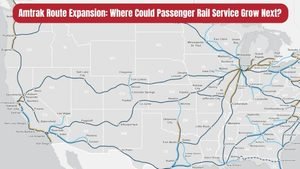
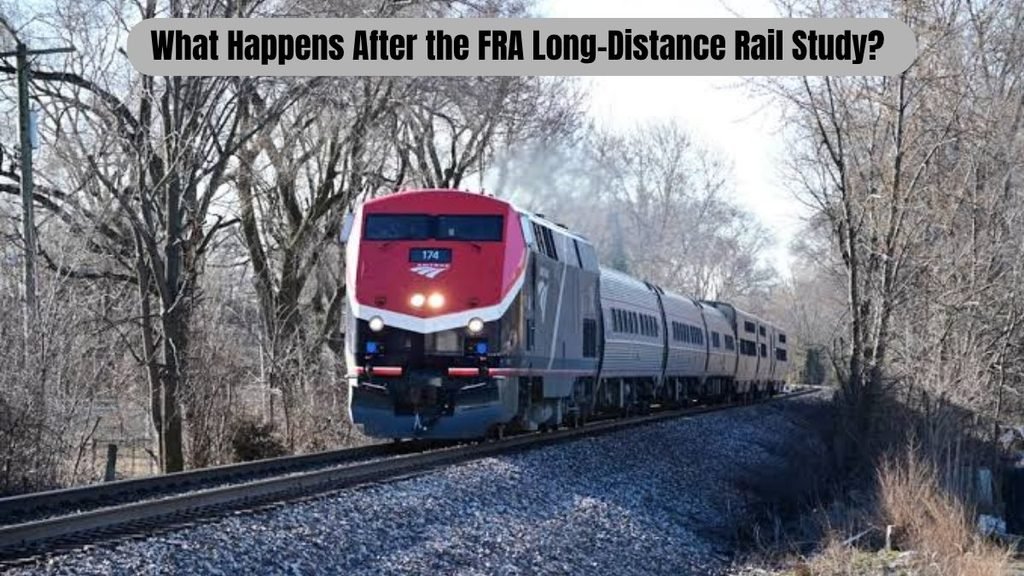
The Federal Railroad Administration (FRA) commissioned the Long-Distance Rail Study to improve long-distance passenger rail service in the United States and expand the Amtrak network in the future. The study’s purpose was not only to assess where current Amtrak trains operate, but also to understand which old routes could be revived, which existing services could be improved or made more frequent, and which new cities could be connected to long-distance rail service in the future. This study addressed several important questions regarding the future of America’s passenger rail network.
What are the next steps after the study is complete?
Completion of the study itself does not necessarily lead to the launch of new Amtrak trains. The most important step after this is to translate these recommendations into actual projects. Before launching any new long-distance route, several factors must be evaluated, including route feasibility, infrastructure, track capacity, stations, equipment, operating costs, and potential passenger demand. Additionally, coordination between the states involved, Amtrak, freight railroads, and other transportation agencies is essential. This means that after a study, potential routes can be prioritized and further researched into their practical and financial feasibility.
Could Discontinued Amtrak Routes Return?
A significant portion of the FRA study focused on the possibility of reviving discontinued long-distance passenger services. Many historic rail services in the United States have been discontinued for various reasons. Simply seeing that a train previously operated on an old route isn’t enough to bring it back. Current population, travel demand, available railroad infrastructure, station facilities, and operating costs also play important roles. Therefore, while some discontinued routes may become strong candidates in the future, this doesn’t mean that all old routes will definitely return.
Could Some Amtrak Routes Become Daily?
Another important possibility is converting existing non-daily Amtrak services to daily service. Some long-distance trains don’t operate every day, which can make travel planning difficult for passengers. If there is sufficient demand and infrastructure capacity on a route, increasing service frequency may be a practical option. Daily operation can improve connectivity between both small and large cities and help make passenger rail a more reliable transportation option. However, this may require additional trains, crews, equipment, and infrastructure investment.
How long does it take to launch new Amtrak routes?
Planning and implementing a new long-distance rail route can be a lengthy process. A detailed route study is first conducted, followed by an examination of infrastructure and operating requirements. This is followed by considerations such as funding, agreements, equipment, and station improvements. Some routes can be developed with relatively little investment, while others may require track improvements, new facilities, or other major infrastructure projects. Therefore, identifying a route in an FRA study is only the beginning; actual train service can take years to begin.
Why is funding one of the biggest challenges?
Long-distance passenger rail service can be expensive to launch and maintain over the long term. Adequate funding is needed for new trains, maintenance facilities, stations, crew, fuel or electricity, track improvements, and other operational requirements. The federal government, as well as states and other partners, may play a role in potential funding. A route recommendation can only progress to a real project if adequate financial support and an implementation plan are available.
What role will Amtrak and the states play?
Amtrak and the states involved could play a crucial role following the FRA study. Long-distance routes traverse multiple states, so cooperation among various stakeholders is essential for a successful service. States will need to assess how useful new or expanded service will be for their communities, while Amtrak will need to evaluate operational requirements and passenger demand. Coordination with freight railroads is also important, as many passenger trains share tracks with freight traffic.
What does this mean for passengers?
The most significant potential benefit of the FRA Long-Distance Rail Study for ordinary travelers could be improved connectivity. If the recommendations are gradually implemented, some communities may receive new passenger rail service, some old routes may return, and some existing routes may become more frequent. This could provide an additional transportation option for people to reach major cities as well as smaller and rural communities. However, travelers should understand that there may be a significant time lag between the study’s recommendation and actual train launches.
The most significant potential benefit of the FRA Long-Distance Rail Study for ordinary travelers could be improved connectivity. If the recommendations are gradually implemented, some communities could receive new passenger rail service, some old routes could return, and some existing routes could become more frequent. This could provide additional transportation options for people to reach both major cities and smaller and rural communities. However, travelers should understand that there could be a significant time lag between the study’s recommendations and actual train launches.
The Future of America’s Long-Distance Rail After the FRA Study
The FRA Long-Distance Rail Study can be seen as an important roadmap for planning the future of America’s passenger rail network. The real challenge now will be which projects are prioritized among the potential opportunities revealed by the study and how they receive funding and infrastructure support. The return of discontinued routes, the expansion of non-daily services, and new long-distance connections could transform America’s rail network in the coming years. While not every proposed route will become a reality immediately, this study helps set the tone for where and how long-distance passenger rail can develop in the United States.
Conclusion
The FRA Long-Distance Rail Study isn’t over; the actual implementation process begins. A new or restored Amtrak service can only become a reality after going through several stages, including feasibility, funding, infrastructure, state partnerships, and operational planning for potential routes. Therefore, the focus in the future will be on which routes from the study’s recommendations receive priority and which projects receive funding and practical support. Expanding the United States’ long-distance passenger rail system can be a long process, but the FRA study has laid an important foundation for understanding future possibilities.