Long-distance passenger rail service in the United States has been a constant topic of discussion regarding how to expand the existing Amtrak network. While many of the country’s largest cities are connected by Amtrak, there are still many smaller cities and regions where long-distance passenger rail service is limited or nonexistent. Therefore, Amtrak route expansion is not simply a matter of introducing new trains but also an effort to make the entire national transportation network more connected. The Federal Railroad Administration’s (FRA) long-distance rail planning has also focused on where there may be opportunities to strengthen existing services, bring back some old ones, and develop new connections in the future.
Which Areas Could Amtrak Expand?
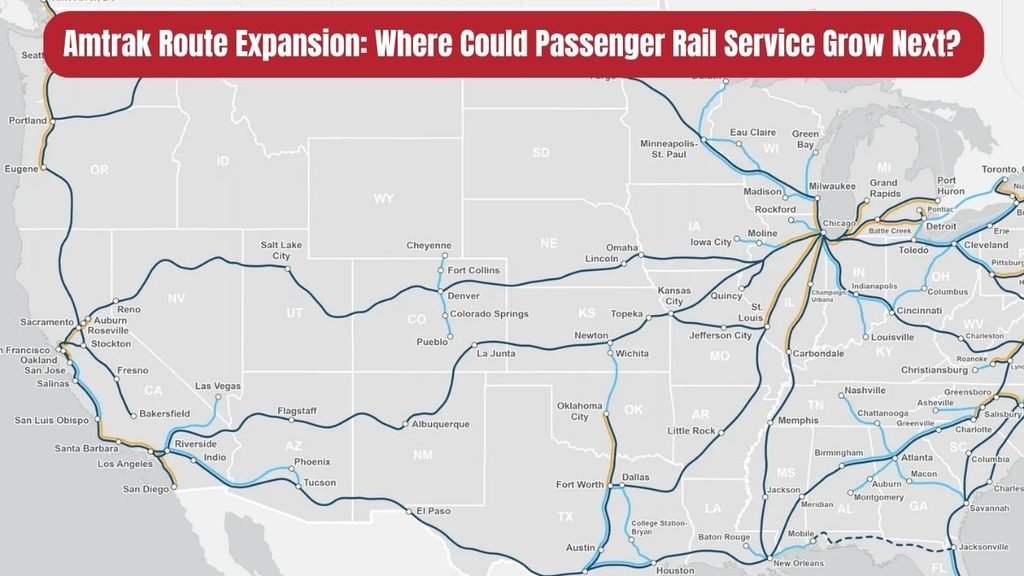
Future Amtrak expansion is most likely in areas where population growth is occurring, tourism is strong, or intercity transportation options are limited. There is significant interest in the need for new passenger rail connections in the Midwest, Southeast, Southwest, and some western regions. Expansion along corridors previously served by passenger trains may be relatively easy because many locations already have existing railroad infrastructure and stations. On the other hand, completely new connections may require significant investment in track capacity, station facilities, and other infrastructure.
New Opportunities for Passenger Rail in the Midwest
The Midwest is one of America’s most important railroad regions, and Chicago has long been a major hub for the national passenger rail network. New or expanded Amtrak services in this region could connect many communities to major metropolitan centers. Improved train connectivity between small and medium-sized cities could provide additional options for business travel, tourism, and personal travel. The potential for service expansion using existing rail corridors in the Midwest is also significant because many routes already rely on freight rail infrastructure, although passenger trains may require additional capacity and scheduling improvements.
Amtrak Expansion Potential in the Southeast
Population growth and increasing travel demand in the Southeast are also driving considerations for passenger rail expansion. Many southern cities are growing rapidly, but not every community has convenient long-distance rail connections. New Amtrak services could improve the connectivity of smaller cities with larger population centers like Atlanta, Georgia, and other southern markets. Such expansion would not only benefit passengers but also boost tourism and regional economic activity. However, sufficient passenger demand and practical railroad access will be essential for the success of any proposed route.
Could Old Amtrak Routes Be Reinstated?
One avenue for Amtrak expansion could be to restore discontinued routes. Many historic passenger rail services in the United States have ceased over time, but potential demand may still exist in some corridors. Reviving an old route may have the advantage of having its basic corridor or station network already in place. However, population patterns, infrastructure conditions, freight traffic, and travel demand may have changed over the years. Therefore, each discontinued route needs to be re-evaluated based on current conditions.
Daily Service Is Also an Important Part of Expansion
Passenger rail expansion doesn’t always mean building new train lines. Making some existing Amtrak long-distance routes more frequent can also be an effective way to expand the network. Converting trains that run only a few days a week to daily service can provide greater flexibility for passengers. This can increase route usefulness and improve regular connectivity to smaller cities. However, daily operation requires additional rolling stock, crews, maintenance capacity, and track availability, so this change also requires significant planning and investment.
The Role of Infrastructure and Freight Railroads
In the United States, passenger and freight rail often share the same railroad infrastructure. Therefore, when planning a new Amtrak route, it’s important to consider the existing traffic on the tracks and whether there’s sufficient capacity available for passenger trains. Some projects may require signaling upgrades, track improvements, bridges, stations, or changes to maintenance facilities. Agreements with freight railroad operators are also important, as schedules and train movements must be carefully coordinated for reliable passenger service.
Route expansion is not possible without funding.
One of the biggest challenges in expanding new Amtrak services is funding. Simply purchasing locomotives and passenger cars isn’t enough to launch a train. Continuous investment is also required for infrastructure upgrades, station improvements, maintenance, staffing, and day-to-day operations. Financial participation from the federal government, states, and other transportation partners can be crucial in moving a route from proposal to actual service. Therefore, participating in a study of a potential route doesn’t guarantee that trains will immediately begin operating there.
What does this mean for passengers?
If the Amtrak network expansion proceeds as planned, passengers could have access to several new travel options. Residents of smaller cities could have passenger rail as an alternative to road and air travel to reach larger metropolitan areas. Long-distance trains could also be useful for tourism and family travel, especially in regions where airport access is limited. Improved rail connectivity could also be important for communities relatively far from the current national transportation network.
The Future of Amtrak Expansion
Amtrak route expansion could take several forms in the coming years—new long-distance services, restored routes, more frequent trains, and improved connectivity on existing corridors. Which project moves forward first will depend on factors such as passenger demand, infrastructure readiness, funding availability, and government and railroad partnerships. Therefore, it’s more appropriate to view any potential route as a future planning opportunity rather than a confirmed service.
Conclusion
Amtrak route expansion is a significant opportunity to make America’s passenger rail system more robust and connected. From regions like the Midwest and Southeast to communities where long-distance service is currently limited, new rail connections are possible in the future. Reviving old routes and making some existing trains daily could also make the network more productive. However, every expansion project will require funding, infrastructure, operational planning, and stakeholder cooperation. That’s why Amtrak’s next major expansion may unfold gradually in phases, but its objective is clear—connecting more cities and communities to America’s passenger rail network.