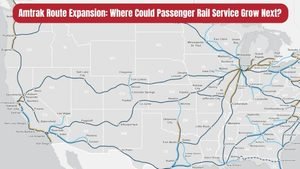
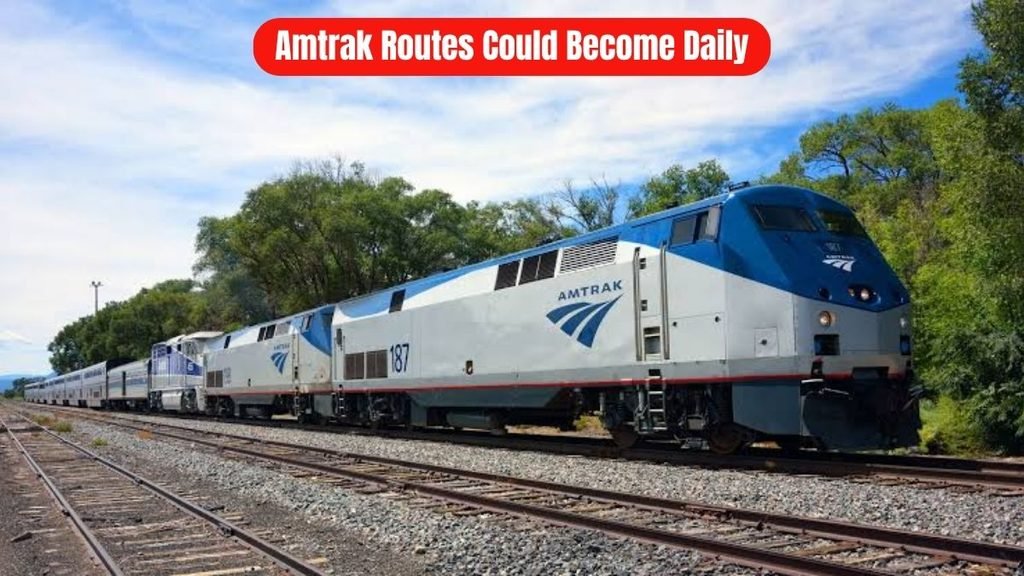
America’s Amtrak network connects the nation’s major cities, as well as provides a vital transportation option for smaller towns and rural communities. However, not all long-distance Amtrak trains run daily. Some services operate on a schedule for only a few days a week, requiring passengers to plan their travel in advance. Consequently, there has been ongoing discussion about converting some routes to daily service to make long-distance rail service more useful. The Federal Railroad Administration’s (FRA) Long-Distance Rail Study also examined the broader question of how the existing long-distance network could be strengthened and which services could be made more frequent.
Which Amtrak Routes Could Be Considered for Daily Service?
When discussing daily service, some existing Amtrak long-distance routes merit particular attention. These include services like the Sunset Limited, Cardinal, and Silver Star, whose frequencies have varied due to historical and current operating conditions. For example, the Sunset Limited currently operates on limited days, while the Cardinal also does not operate daily. Making such routes daily could provide passengers with more flexible travel options and strengthen connectivity for communities where intercity rail alternatives are limited. However, inclusion of a route in a study or proposal does not ensure that it will immediately become daily.
Possibility of Making the Sunset Limited Daily
The Sunset Limited is one of America’s most popular long-distance passenger train services and runs the long distance between Los Angeles and New Orleans. Its limited frequency has long been a topic of passenger rail discussions. If this route were converted to daily service, passengers between the Southwest and the Gulf Coast could enjoy more flexible scheduling. Simply running additional trains for daily operation would not be enough; issues such as crews, equipment, maintenance, and railroad infrastructure capacity would also need to be addressed. Therefore, the possibility of daily service will depend heavily on infrastructure and funding decisions.
What benefits would the cardinal have if it became a daily service?
The Cardinal provides a vital east-west connection between Chicago and New York and passes through Washington, D.C., and several other communities. Because this route doesn’t operate daily, passengers have limited departure options. If the Cardinal transitions to daily operation, passengers could be able to travel more days of the week. Regular service could also be useful for smaller cities where train connectivity is already limited. The infrastructure, equipment, and operating resource requirements for a daily carding operation will need to be considered.
Silver Service Routes and Daily Operations
Amtrak’s Florida-bound Silver services are also a vital part of the long-distance rail network. The Silver Star and Silver Meteor connect Florida to the Northeast, providing long-distance passenger rail access to many communities. Discussions about increasing service frequency could be important in terms of passenger demand and network connectivity. In a state like Florida, with its large population and tourism market, more frequent long-distance rail service could be an attractive option for travelers. However, factors such as infrastructure capacity, operating costs, and available equipment will also play a role in the final decision.
What benefits will passengers gain from daily service?
The most direct benefit of taking a long-distance train daily is flexibility. If the train runs only a few days a week, passengers have to plan their journeys according to that schedule. Daily service gives passengers more departure options, making rail more convenient for business travel, family visits, and tourism. Regular service can also be important for smaller cities, keeping them more consistently connected to larger metropolitan areas. Additionally, daily trains can increase a route’s overall visibility and usefulness.
Why isn’t it easier to make every route daily?
Daily service may sound simple, but long-distance railroad operations are quite complex. An additional daily train requires rolling stock, locomotives, onboard crews, and maintenance resources. Furthermore, passenger trains may face challenges related to operating priority and track capacity on freight railroad tracks. Stations and maintenance facilities may also need to be prepared to handle increased service frequency. For all these reasons, passenger demand alone is not sufficient for daily service.
Role of Funding and Infrastructure
The expansion of daily Amtrak service is directly linked to funding. Investments may be required for recurring train operation costs as well as infrastructure improvements. Some corridors may require track upgrades, signaling improvements, or additional capacity. Cooperation between the federal government, states, Amtrak, and host railroads could be crucial in moving this process forward. This is why the FRA study should not be viewed simply as a list of routes but as a comprehensive framework for planning long-distance passenger rail expansion.
Will Daily Service Definitely Begin?
This is the most important thing travelers should understand. Just because a route is considered for daily service or mentioned in a study does not guarantee that it will definitely become daily. Actual implementation requires detailed planning, cost analysis, funding, infrastructure availability, and stakeholder agreements. While there is hope for potential routes, the final schedule and implementation will depend on various future decisions.
The Future of Long-Distance Rail in the United States
Making Amtrak’s long-distance network daily and more reliable could be a major step toward strengthening passenger rail connectivity in the United States. Increasing the frequency of routes like the Sunset Limited and Cardinal could provide many communities with better transportation options. Similarly, improvements to other existing services could make the national rail network more connected. It will be interesting to see in the coming years how the FRA study’s recommendations, available funding, and infrastructure projects translate into actual service improvements.
Conclusion
The potential for converting some Amtrak long-distance routes to daily service is an important topic for the future of passenger rail. Making the Sunset Limited, Cardinal, and some other limited-frequency services more frequent could provide greater flexibility for passengers and stronger connectivity for communities. However, instituting daily service requires adequate funding, trains, crews, maintenance facilities, and railroad infrastructure. Therefore, the most accurate conclusion for now is that daily service is a potential expansion opportunity, not a definitive announcement for every route. As planning and funding decisions progress, it will become clear which Amtrak routes could actually get a daily schedule.