

Adolescence is a period of major physical, emotional, and psychological change. Teenagers are dealing with school responsibilities, changing friendships, family expectations, social pressures, and a growing desire for independence. At the same time, their bodies and brains are developing rapidly, which can naturally affect their sleep patterns. While occasional difficulty sleeping is common, persistent insomnia can leave adolescents tired, irritable, unfocused, and emotionally overwhelmed during the day. One factor that deserves more attention is physical activity. Exercise and everyday movement are often connected with better sleep, but the relationship is not always simple. Psychological factors such as anxiety, stress, and excessive short-video use can influence both how active a teenager is and how easily they fall asleep. Understanding these connections can help explain why some adolescents struggle to get the restorative sleep their growing bodies need.
Physical Activity and the Adolescent Brain
Physical activity does much more than strengthen muscles and improve physical fitness. Movement also affects the brain, mood, stress response, and daily energy levels. When adolescents participate in regular activities such as walking, cycling, sports, dancing, swimming, or simply spending time outdoors, they give their bodies an opportunity to release physical tension and regulate energy. Exercise can also support emotional well-being by encouraging the release of chemicals associated with positive mood. For a teenager experiencing academic pressure or everyday stress, physical activity may provide a healthy break from constant thinking and screen exposure. However, not every adolescent has the same relationship with exercise. Some teenagers are highly active, while others spend much of their spare time sitting, studying, gaming, or watching videos. These lifestyle differences may contribute to variations in sleep quality and bedtime habits.
How Insomnia Can Affect Teenagers
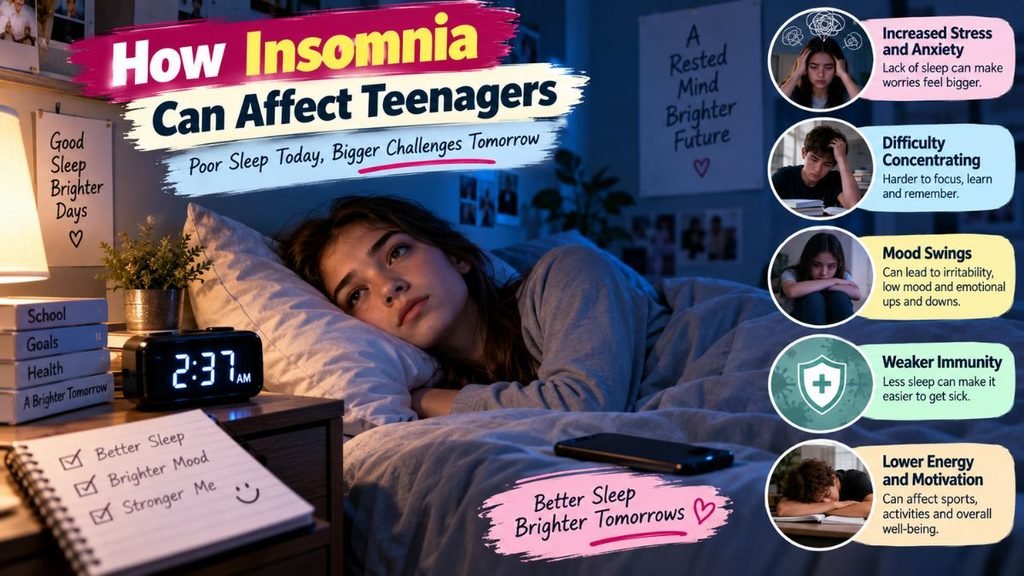
Insomnia is more than simply staying awake for a short period longer than usual. For adolescents, ongoing sleep difficulties may involve trouble falling asleep, waking repeatedly during the night, waking earlier than intended, or feeling that sleep was not refreshing. Poor sleep can affect concentration, memory, motivation, mood, and the ability to manage everyday stress. A teenager who sleeps badly may feel exhausted during school but become strangely alert at bedtime, creating a frustrating cycle. When this pattern continues, the bedroom itself can sometimes become associated with worry about not sleeping. Instead of approaching bedtime calmly, the adolescent may begin thinking, “What if I cannot sleep again?” That expectation can increase mental arousal and make falling asleep even harder. This is one reason why insomnia can involve psychological processes as well as physical ones.
Anxiety Can Connect Activity and Sleep
Anxiety is an important part of the relationship between physical activity and insomnia. Adolescents may experience anxiety about examinations, grades, friendships, family situations, appearance, social acceptance, or their future. When anxious thoughts remain active at night, the mind may continue analyzing problems even when the body is tired. Physical activity may help some teenagers manage everyday stress by providing an outlet for nervous energy and encouraging relaxation after activity. On the other hand, adolescents who are already experiencing anxiety may withdraw from physical activity and spend more time alone with their thoughts or on digital devices. This can create a cycle in which reduced activity, increased anxiety, and poor sleep reinforce one another. The relationship is therefore not simply about exercise causing better sleep; emotional well-being can influence both sides of the equation.
The Role of Short-Video Addiction
Another modern factor is the increasing amount of time teenagers spend watching short-form videos. Platforms built around rapidly changing videos can be highly engaging because new content appears continuously and requires very little effort to consume. A teenager may intend to watch for a few minutes before bed but continue scrolling much longer than planned. This can push bedtime later and reduce the amount of time available for sleep. Beyond the lost hours, constant digital stimulation may also make it difficult for the mind to transition from an alert, entertainment-focused state into a calmer bedtime state. For some adolescents, short-video use may also become a way of avoiding uncomfortable emotions or anxious thoughts. Instead of dealing with stress directly, they may turn to endless scrolling for distraction. This temporary relief can unintentionally strengthen the habit, making it harder to stop using the device when bedtime arrives.
Why Exercise Alone May Not Solve Insomnia

It is tempting to assume that simply exercising more will automatically fix sleep problems, but the psychology of insomnia is more complicated. Physical activity can be beneficial, yet an adolescent may continue struggling with sleep if anxiety, irregular routines, excessive screen use, or other emotional difficulties remain unaddressed. For example, a teenager might participate in sports during the afternoon but spend several hours scrolling through short videos late at night. The positive effects of daytime activity may then be undermined by a delayed bedtime and ongoing mental stimulation. Similarly, an anxious teenager may exercise regularly but still lie awake worrying about school or personal problems. This is why healthy sleep should be viewed as part of a broader lifestyle rather than the result of a single behavior.
Creating a Healthier Daily Rhythm
A consistent daily rhythm can help adolescents create clearer boundaries between daytime activity and nighttime rest. Regular physical movement during the day, exposure to natural light, predictable meal times, and a reasonably consistent bedtime can all support healthier routines. Reducing stimulating screen activities before bed may also make the transition to sleep easier. The goal does not have to be perfection. Teenagers are unlikely to follow an ideal schedule every single day, and occasional late nights are normal. What matters more is creating habits that are sustainable over time. Encouraging adolescents to replace some passive screen time with enjoyable physical activities can be particularly useful because the activity does not have to feel like formal exercise. Walking with friends, playing a favorite sport, riding a bicycle, or simply spending time outdoors can all provide movement without making the experience feel like another obligation.
Listening to the Psychological Side of Sleep
Parents, teachers, and caregivers sometimes focus on tiredness as a physical problem without asking what might be happening emotionally. A teenager who regularly complains about poor sleep may be dealing with worry, academic pressure, loneliness, social difficulties, or excessive dependence on digital entertainment. Listening without immediately judging or criticizing can make it easier for the adolescent to talk about these experiences. Instead of simply saying, “Stop using your phone,” it may be more productive to understand why the teenager keeps reaching for it. If short videos have become a way to escape anxiety, removing the phone without addressing the underlying emotions may not solve the problem. Helping adolescents develop healthier ways to manage stress, relax, connect socially, and stay active can provide a more lasting approach.
Small Changes Can Make a Meaningful Difference
Improving sleep does not necessarily require dramatic lifestyle changes. Small adjustments can gradually influence the relationship between physical activity, anxiety, screen habits, and sleep. A short walk during the day, spending time outside, reducing late-night scrolling, keeping a more regular sleep schedule, and finding a relaxing activity before bed can all be practical starting points. Adolescents may respond better when they are involved in choosing these changes rather than feeling that every decision is being imposed on them. Giving teenagers a sense of control can make healthy habits feel more achievable and less like punishment. Over time, consistent small behaviors may create a healthier pattern in which daytime movement supports emotional regulation and nighttime routines encourage rest.
When Persistent Insomnia Needs More Attention
Although occasional sleep difficulties are common, persistent insomnia should not simply be dismissed as typical teenage behavior. If an adolescent repeatedly struggles to sleep, experiences significant daytime fatigue, has difficulty concentrating, or shows ongoing signs of anxiety or emotional distress, it may be worth discussing the situation with a qualified healthcare or mental health professional. Sleep problems can have multiple causes, and identifying the underlying factors is important. Professional support can help determine whether anxiety, lifestyle habits, sleep disorders, or other concerns are contributing to the problem. Early attention may also prevent unhealthy sleep patterns from becoming more deeply established.
The Bigger Picture
The psychology behind physical activity and insomnia in adolescents shows that sleep is connected to much more than bedtime itself. Physical activity, emotional health, anxiety, and digital habits can interact in complicated ways. Regular movement may support healthier sleep and emotional regulation, while anxiety and excessive short-video use can make restful sleep more difficult. At the same time, poor sleep can leave teenagers less motivated to exercise and more vulnerable to stress, creating a cycle that can be difficult to break. The most helpful approach is therefore not to blame teenagers for their habits but to understand the psychological and lifestyle factors influencing those habits. By encouraging regular activity, healthier digital boundaries, emotional support, and consistent sleep routines, adolescents can build a stronger foundation for both mental well-being and better-quality sleep.
FAQs
Q1. Can exercise improve teen sleep?
A1. Yes, regular activity may support better sleep.
Q2. Can anxiety cause adolescent insomnia?
A2. Yes, anxiety can make falling asleep harder.
Q3. Can short videos affect teen sleep?
A3. Yes, excessive scrolling may delay bedtime.