
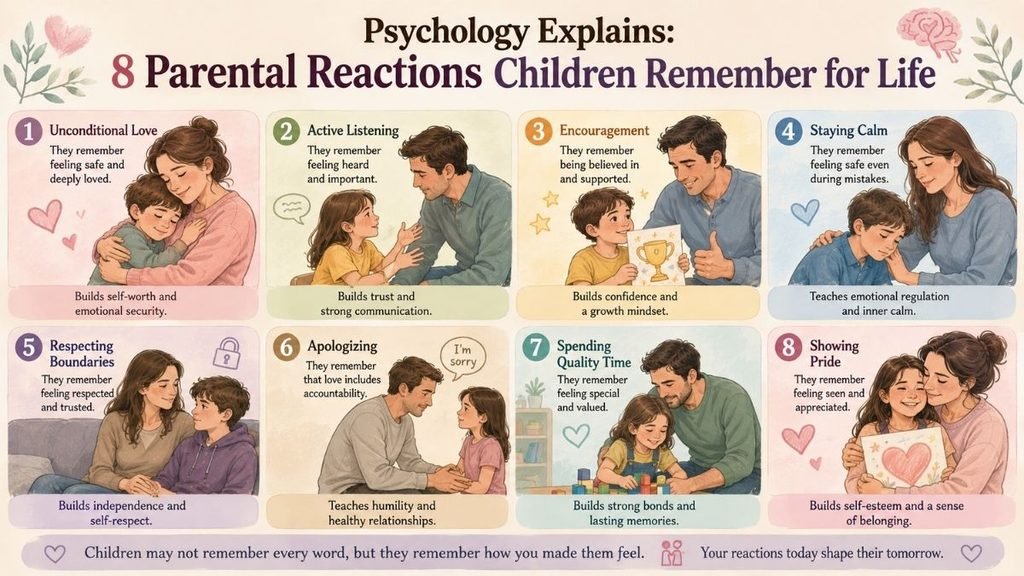
Children forget a surprising number of things as they grow up. They may not remember every rule their parents made, every homework argument, or every small mistake they were punished for. But what often stays with them is how their parents reacted during emotionally important moments. A child may forget what caused an argument yet remember the feeling of standing alone in their room afterward. They may forget why they were crying, but remember whether someone hugged them or told them to stop. Childhood is not simply a collection of events; it is also a collection of emotional experiences. The way parents respond to mistakes, fear, sadness, anger, and vulnerability can influence how children eventually understand themselves and their relationships with others. This does not mean parents have to respond perfectly all the time. Parental is difficult, and everyone loses patience occasionally. What matters is the overall pattern and whether a child feels safe, heard, valued, and loved even when things go wrong.
Being Shamed After Making a Mistake
Children are going to make mistakes. They spill things, break rules, forget responsibilities, say the wrong thing, and sometimes behave in ways that frustrate their parents. The mistake itself is usually temporary, but the emotional reaction surrounding it can leave a much deeper impression. When a parent responds by humiliating or shaming a child, the child may begin to connect mistakes with being a “bad” person rather than seeing them as opportunities to learn. Statements that attack a child’s character can become internalized over time, especially when they are repeated. There is an important difference between correcting behavior and attacking identity. Saying, “That behavior was not okay, and we need to fix it,” teaches accountability. Making a child feel worthless teaches shame. Children need to understand that they can make mistakes without losing their parent’s love or their sense of worth.
Being Dismissed When They Are Upset
One of the most powerful things a parent can do is take a child’s emotions seriously, even when the reason behind those emotions seems small to an adult. A broken toy, an argument with a friend, a disappointing grade, or being left out of a game may not seem like a major problem from an adult perspective, but it can feel enormous to a child. When parents repeatedly respond with phrases such as “Stop crying,” “It’s not a big deal,” or “You’re being dramatic,” children may learn to hide their feelings rather than understand them. Over time, they can become uncomfortable expressing sadness, fear, or disappointment. A parent’s willingness to listen does not mean agreeing with every reaction. It simply communicates that emotions are allowed and that the child does not have to face them alone.
Anger That Feels Unpredictable

Children can adapt to many rules, but unpredictability can be particularly unsettling. If a parent reacts calmly to something one day but explodes over the same behavior another day, a child may begin constantly watching the parent’s mood. They may become overly careful about what they say or do because they cannot predict what will trigger anger. This kind of environment can make children feel responsible for managing the emotional atmosphere around them. Healthy discipline involves boundaries and consequences, but children also benefit from knowing what to expect. When parents explain their expectations and remain reasonably consistent, children have a clearer sense of safety. Nobody can remain calm every second, but repairing the situation after losing patience can be incredibly meaningful.
Comparing Them With Other Children
Few things can make a child feel inadequate as quickly as repeated comparison. Parents may sometimes believe that mentioning another child’s achievements will motivate their own child, but comparisons can instead create feelings of insecurity or resentment. Hearing that a sibling is smarter, a friend is better behaved, or another child performs better can make children believe that love and approval are connected to achievement. Rather than asking, “Why can’t you be more like them?” it is more constructive to focus on the child’s own progress and abilities. Children need to know that they are valued for who they are, not simply for how they perform compared with someone else. A child who grows up feeling constantly compared may carry that habit into adulthood, measuring their worth against everyone around them.
Ignoring Their Need for Comfort
Children naturally look to their parents for comfort when they are scared, hurt, overwhelmed, or uncertain. Sometimes they simply want someone to sit beside them or offer reassurance. When a parent repeatedly refuses emotional closeness, children may interpret that distance as a message that their needs are inconvenient. They might eventually stop asking for comfort altogether. This does not mean parents must immediately solve every emotional problem. Sometimes simply saying, “I know this is hard, and I’m here with you,” can make a tremendous difference. Physical affection, attentive listening, and calm reassurance can help children develop a sense that relationships are places where vulnerability is safe rather than something they should hide.
Publicly Embarrassing or Mocking Them
Children are particularly sensitive to how they are perceived by others. Being laughed at by a parent in front of relatives, friends, teachers, or strangers can feel deeply humiliating. What an adult considers a harmless joke may be remembered by a child as a moment when they felt exposed or unsupported. Repeated teasing about appearance, personality, mistakes, fears, or weaknesses can affect confidence and the child’s willingness to express themselves. Humor has a place in family life, but it should not come at the cost of a child’s dignity. Children need to know that home is a safe place where they do not have to constantly protect themselves from embarrassment.
Withdrawing Love or Affection as Punishment
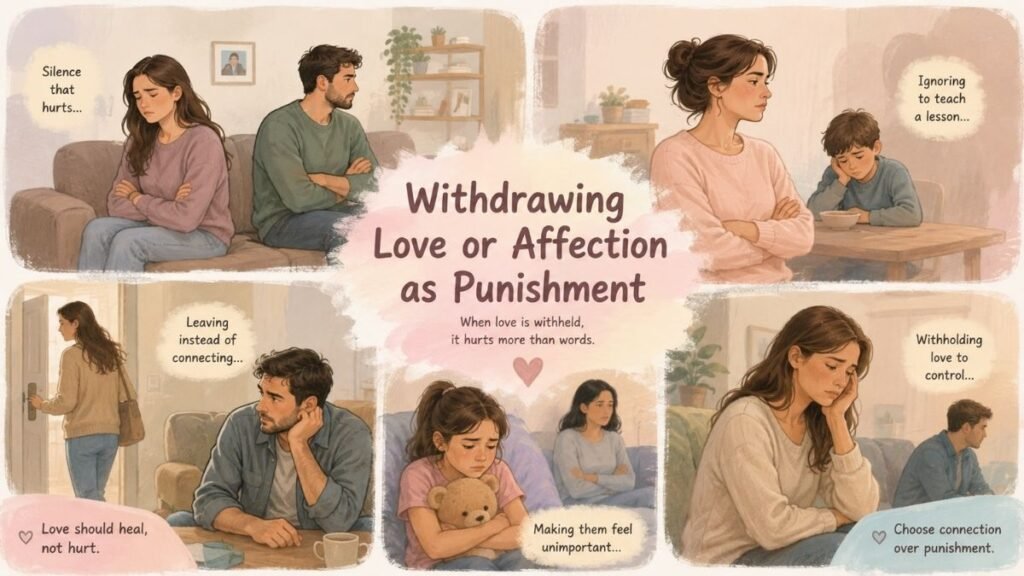
Discipline and emotional rejection are not the same thing. Children need boundaries, but they also need reassurance that a disagreement does not threaten the parent-child relationship. When parents deliberately withdraw affection, ignore a child for long periods, or make love seem conditional on obedience, children may become afraid that connection can disappear whenever they disappoint someone. This can create a powerful emotional insecurity. A healthier approach is to separate the behavior from the relationship: “I’m upset about what happened, but I still love you, and we need to talk about it.” That message teaches children that relationships can survive conflict and that mistakes do not automatically lead to abandonment. Refusing to Apologize After Hurting Them
Parents are human, and they will sometimes say something harsh, misunderstand a situation, or lose their temper. What children remember may not be the mistake itself but what happens afterward. When a parent acknowledges their behavior and genuinely apologizes, they teach an incredibly valuable lesson: being an adult does not mean being incapable of making mistakes. An apology can show a child that accountability applies to everyone, including parents. On the other hand, when parents never acknowledge hurtful behavior, children may conclude that authority means never admitting fault. A simple, sincere apology can help repair trust and demonstrate what healthy conflict resolution looks like.
What Children Ultimately Remember
The goal of parenting is not to create a childhood without mistakes, arguments, disappointment, or difficult emotions. That would be impossible. Children do not need perfect parents; they need parents who are willing to repair, listen, learn, and reconnect. A parent may occasionally raise their voice, make the wrong decision, or respond poorly under stress. What can make a lasting difference is what happens next. Do they acknowledge what happened? Do they listen to the child’s feelings? Do they apologize when necessary? Do they make an effort to respond differently the next time?
The emotional atmosphere created by parents can become part of the way children understand themselves and the world around them. When children regularly experience respect, reassurance, patience, and genuine affection, they are more likely to develop a strong sense of security. When they experience repeated shame, dismissal, comparison, or emotional rejection, those experiences may become difficult memories that follow them into later relationships. Ultimately, the most meaningful thing parents can give their children is not a flawless childhood but the confidence that they are loved even when they struggle, make mistakes, or have difficult emotions. Sometimes, the smallest parental reaction—a hug, an apology, a patient conversation, or simply saying “I’m listening”—can become one of the memories a child carries for the rest of their life.
FAQs
Q1. What do children remember most from childhood?
A1. They often remember how their parents made them feel.
Q2. Can parental reactions affect children long-term?
A2. Yes, repeated reactions can influence confidence and relationships.
Q3. Do parents need to be perfect?
A4. No. Consistent love, support, and repair matter more than perfection.