
Military Benefits 2027 Explained: Retirement Pay, Disability Benefits and COLA Updates
Military benefits can play an important role in the financial security of service members, military retirees, veterans, and eligible family members. As 2027 approaches, many people are watching for updates to retirement pay, disability compensation, and cost-of-living adjustments (COLA). These benefits are not all calculated in the same way, and the amount a person receives can depend on factors such as years of service, disability rating, dependent status, and applicable federal rules. Understanding the basics can make it easier to follow official announcements and plan ahead.
Military Retirement Pay in 2027
Military retirement pay is generally based on a service member’s years of qualifying service, retirement system, and retired pay base. Members who qualify for a military retirement can receive monthly payments after leaving active service, although the exact rules differ depending on when they entered service and which retirement plan applies to them. The Blended Retirement System (BRS), for example, combines a traditional pension with contributions to the Thrift Savings Plan. Older service members may be covered by earlier retirement systems with different formulas. Because of these differences, there is no single retirement payment amount that applies to every military retiree in 2027.
Disability Compensation and VA Benefits
Military disability benefits are separate from standard military retirement pay. Veterans with service-connected disabilities may qualify for tax-free disability compensation from the Department of Veterans Affairs (VA). The amount generally depends on the veteran’s VA disability rating and other factors, including whether the veteran has eligible dependents. Higher disability ratings generally correspond to higher monthly compensation, while certain circumstances can affect eligibility or payment amounts. Veterans should review their individual VA records and official benefit information rather than relying on general estimates when determining what they may receive.
Understanding the 2027 COLA Update
The cost-of-living adjustment, commonly called COLA, is designed to help certain federal benefits keep pace with changes in consumer prices. COLA adjustments can affect military retired pay and VA disability compensation, but the timing and calculation rules can differ between programs. The final percentage for 2027 will depend on the applicable federal calculation and official announcement. Until the figure is formally established, estimates should be treated as projections rather than guaranteed increases.
How COLA Could Affect Monthly Payments
Even a relatively small COLA percentage can make a noticeable difference over the course of a year because the increase is generally applied to existing monthly benefits. For example, a retiree receiving a larger monthly payment would see a greater dollar increase than someone receiving a smaller benefit if both receive the same percentage adjustment. However, individual circumstances can vary, and a COLA does not necessarily mean every military-related benefit will increase by exactly the same amount or at the same time.
Other Benefits Military Families May Receive
Military families may have access to benefits beyond retirement and disability compensation. Depending on eligibility, these can include health care, survivor benefits, education assistance, housing-related programs, and other services. Some benefits are available through the Department of Defense, while others are administered by the VA or other federal agencies. Eligibility requirements can also change depending on a person’s service history, discharge status, disability circumstances, and family situation.
What to Watch for in 2027
For anyone planning around military or veterans’ benefits, official announcements are more useful than early estimates. Changes to retirement pay, VA compensation, and COLA can affect monthly household budgets, so beneficiaries should check information from the Department of Defense, Defense Finance and Accounting Service (DFAS), and the Department of Veterans Affairs as updates are released. Keeping personal records current and reviewing benefit statements can also help identify changes when new payment rates take effect.
Final Thoughts
Military benefits in 2027 will remain an important source of financial support for millions of service members, retirees, veterans, and eligible families. Retirement pay is influenced by military service and retirement-system rules, while VA disability compensation is tied to qualifying service-connected disabilities and applicable VA rates. COLA adjustments may increase certain payments to account for changes in living costs. Since official rates and policies can change, beneficiaries should use current government information when making financial plans for 2027.
FAQs
Q1. What is military retirement pay?
A1. Monthly income based on qualifying military service.
Q2. What is VA disability compensation?
A2. Tax-free payments for qualifying service-connected disabilities.
Q3. Will military benefits increase with COLA?
A3. Eligible benefits may increase after official COLA adjustments.
SSI 2027 Payment Dates: Expected Schedule, Eligibility and Benefit Updates
Supplemental Security Income (SSI) provides monthly financial assistance to people with limited income and resources who are aged 65 or older, blind, or disabled. For millions of Americans, these payments are an important part of managing everyday expenses such as housing, food, utilities, and medical costs. As 2027 approaches, SSI recipients and applicants may want to understand when payments are expected to arrive, who can qualify, and whether benefit amounts could change.
SSI Payment Schedule for 2027
SSI payments are generally issued on the first day of each month. However, when the first falls on a weekend or federal holiday, the Social Security Administration (SSA) generally sends the payment on the preceding business day. This means some months can have an earlier payment date, and recipients may occasionally receive two SSI payments in the same calendar month. An early payment does not represent an additional benefit; it is the payment for the following month.
For 2027, recipients should therefore pay attention to the calendar when planning their monthly budgets. Bank processing times can also affect when funds actually become available in an individual’s account. The official SSA payment calendar should be checked as the year approaches, particularly if a payment appears earlier or later than expected.
Who May Be Eligible for SSI in 2027?
SSI eligibility is based primarily on financial need and certain personal circumstances. Generally, applicants must have limited income and resources and must be aged 65 or older, blind, or have a qualifying disability. Unlike Social Security retirement benefits, SSI is not based on a person’s work history or the amount of Social Security taxes they have paid.
Applicants must also meet U.S. citizenship or qualifying noncitizen requirements and satisfy applicable income and resource rules. Certain resources are excluded when determining eligibility, while other assets may count toward the resource limit. Because individual circumstances can be complicated, people considering SSI should review their situation with the SSA rather than assuming they qualify based on income alone.
Could SSI Benefits Increase in 2027?
SSI benefit amounts can change because federal benefit levels are adjusted periodically. One important factor is the annual Cost-of-Living Adjustment (COLA), which is intended to help Social Security and SSI beneficiaries keep pace with inflation. The applicable 2027 adjustment will determine how much eligible recipients receive compared with the previous year.
The actual amount a person receives can be different from the maximum federal SSI benefit because SSI payments depend on factors such as countable income, living arrangements, and other circumstances. Some states also provide additional assistance to eligible SSI recipients, which can affect the total amount available to them.
What Can Affect Your Monthly SSI Payment?
Receiving the maximum SSI amount is not automatic for every eligible recipient. Countable income can reduce a person’s federal SSI payment, while changes in living arrangements or financial circumstances can also affect eligibility or the monthly amount. For example, receiving certain types of income or assistance may need to be reported to the SSA.
Recipients should report relevant changes promptly. Keeping information about income, resources, address, household circumstances, and living arrangements up to date can help prevent payment problems and potential overpayments.
What Should SSI Recipients Expect in 2027?
SSI recipients should expect the basic payment system to remain focused on monthly benefits, with payment dates shifting when the normal payment date falls on a weekend or federal holiday. The amount received in 2027 will depend on the federal benefit levels and each recipient’s individual circumstances.
Anyone relying on SSI for essential expenses should monitor official SSA announcements rather than relying on social media posts or unofficial payment calendars. Checking the payment schedule and reviewing benefit information regularly can make it easier to plan for rent, groceries, utilities, and other monthly costs.
Final Thoughts
The SSI 2027 payment schedule will be particularly important for beneficiaries who depend on these monthly payments to cover essential living expenses. While SSI payments are generally scheduled for the first of each month, weekends and federal holidays can result in earlier payment dates. Eligibility continues to depend on factors such as age, blindness or disability, income, and resources, while the final 2027 benefit amounts will depend on applicable federal adjustments and individual circumstances.
For the most accurate information, SSI recipients and applicants should use official Social Security Administration resources when checking payment dates, eligibility requirements, reporting responsibilities, and benefit updates. Planning ahead and understanding how the schedule works can help beneficiaries avoid confusion when payment dates change from month to month.
FAQs
Q1: When will SSI payments arrive in 2027?
A1: Payments generally arrive on scheduled monthly dates.
Q2: Who can qualify for SSI benefits?
A2: Eligible people meet income and disability requirements.
Q3: Can SSI benefits increase in 2027?
A3: Benefits may change following annual COLA adjustments.
Social Security COLA 2027: What the Next Increase Could Mean for Beneficiaries
For millions of Americans who rely on Social Security, even a small annual increase can make a meaningful difference in the household budget. The Social Security cost-of-living adjustment, commonly known as COLA, is designed to help benefits keep pace with changes in the prices of everyday goods and services. As beneficiaries look ahead to 2027, many are wondering how the next COLA could affect their monthly payments, purchasing power, and overall financial planning. While the official 2027 adjustment has not yet been announced, understanding how COLA works can help recipients prepare for the change.
What Is the Social Security COLA?
The Social Security COLA is an annual adjustment intended to help Social Security benefits keep up with inflation. Instead of remaining at the same amount year after year, benefits can increase when consumer prices rise. The adjustment applies to Social Security retirement, disability, and survivor benefits, as well as Supplemental Security Income in accordance with applicable rules. The purpose is relatively straightforward: when the cost of living becomes more expensive, beneficiaries may receive a higher monthly benefit to help offset some of those increased expenses.
When Will the 2027 COLA Be Announced?
The official COLA for 2027 is expected to be announced in October 2026. The calculation is based on inflation data from the third quarter of the year, using a specific measure known as the Consumer Price Index for Urban Wage Earners and Clerical Workers, or CPI-W. Because the final calculation depends on inflation figures that are not available until later in the year, estimates released before the official announcement can change.
For beneficiaries, this means that headlines about a possible 2027 increase should generally be treated as estimates until the Social Security Administration announces the official percentage. The final adjustment will determine how much benefits increase beginning with payments affected by the new COLA.
How Could a COLA Increase Affect Monthly Benefits?
The effect of the 2027 COLA will depend on the amount a person currently receives from Social Security. A percentage increase is applied to the existing benefit amount, so people receiving larger monthly benefits will generally see a larger dollar increase than those receiving smaller payments.
For example, if a beneficiary receives $2,000 per month and the annual adjustment were 3%, the monthly benefit would increase by approximately $60, bringing the new amount to about $2,060 before considering any other changes or deductions. This is only an illustration and does not represent the actual 2027 COLA. The final increase will depend on the official percentage announced by the Social Security Administration.
Why the Increase Matters to Beneficiaries
A higher Social Security payment can be particularly important when everyday expenses continue to rise. Housing, groceries, utilities, transportation, insurance, and healthcare can take up a significant portion of a retiree’s monthly budget. Even when the annual increase seems small, the cumulative effect of the extra money can be significant over the course of a year.
However, a COLA does not necessarily mean that every beneficiary will feel financially better off. If essential expenses rise faster than Social Security benefits, some recipients may still experience pressure on their household budgets. Medicare premiums and other deductions can also affect the amount that actually reaches a beneficiary’s bank account.
What Beneficiaries Should Watch for in 2027
Recipients should pay attention to official announcements from the Social Security Administration rather than relying entirely on early estimates circulating online. Once the 2027 COLA is announced, beneficiaries can compare their current monthly payment with the expected adjusted amount and review their household budget accordingly.
It can also be useful to look beyond the headline percentage. The actual amount deposited into a person’s account can be affected by factors such as Medicare-related deductions, taxes, or changes in an individual’s benefit circumstances. Therefore, the COLA percentage alone does not always tell the complete story about how much money a beneficiary will receive.
Planning Ahead for the Next Increase
The 2027 Social Security COLA will be an important update for beneficiaries who depend on monthly payments to cover essential expenses. Although the final increase will not be known until the official announcement, recipients can use the months ahead to review their budgets, track recurring expenses, and consider how changes in prices may affect their financial needs.
Ultimately, the 2027 COLA is intended to help Social Security benefits respond to inflation. The actual impact will vary from person to person depending on their benefit amount, expenses, deductions, and overall financial situation. Staying informed through official Social Security updates can help beneficiaries understand what the next increase means for their monthly income and plan accordingly.
FAQs
Q1. What is the 2027 Social Security COLA?
A1. It is the annual benefit increase.
Q2. When will the 2027 COLA be announced?
A2. The announcement is expected in October 2026.
Q3. Who will receive the 2027 COLA?
A3. Eligible Social Security beneficiaries will receive it.
SSI Benefits September 2026: Payment Dates, Eligibility and Key Information
Supplemental Security Income (SSI) remains an important source of financial support for eligible people with limited income and resources. As September 2026 approaches, beneficiaries may want to review their expected payment timing, benefit amounts, and eligibility requirements. SSI is administered by the Social Security Administration (SSA) and is designed primarily to provide monthly payments to people who are aged 65 or older, blind, or have a qualifying disability, provided they also meet the program’s financial and residency requirements.
SSI Payment Schedule for September 2026
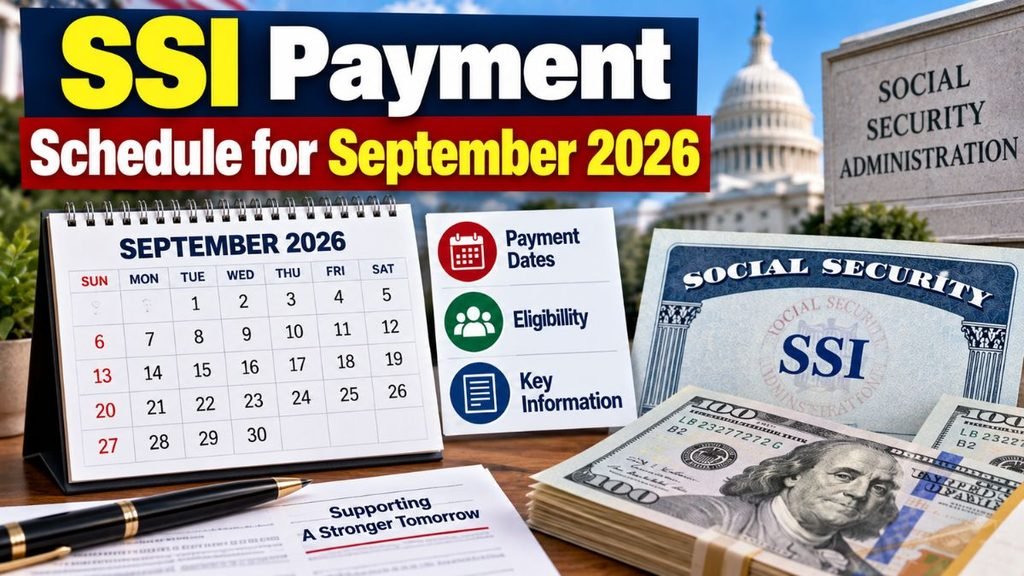
SSI payments are generally issued on the first day of the month. However, when the first falls on a weekend or federal holiday, the payment can be issued on an earlier business day. The SSA’s official 2026 payment calendar should therefore be used when checking the exact payment date. Beneficiaries who receive both SSI and Social Security benefits can also have different payment arrangements depending on their circumstances. For September 2026, recipients should check their bank account, Direct Express account, or other chosen payment method around the scheduled date and allow for normal financial-institution processing time.
How Much Is SSI in 2026?
The maximum federal SSI payment increased in 2026 following the annual cost-of-living adjustment. The maximum federal payment is $994 per month for an eligible individual and $1,491 for an eligible couple when both spouses qualify and other applicable conditions are met. An individual’s actual payment can be lower because SSI benefits are affected by countable income and certain living arrangements. Some states may also provide supplemental payments, meaning the total amount can differ depending on where a beneficiary lives.
Who May Qualify for SSI?
SSI eligibility is based on several requirements rather than age alone. Generally, a person must be 65 or older, blind, or have a qualifying disability while also having limited income and limited resources. The applicant must generally be a U.S. citizen or national or meet certain noncitizen requirements and must reside in one of the 50 states, the District of Columbia, or the Northern Mariana Islands. The SSA evaluates individual circumstances when determining eligibility, so meeting one requirement does not automatically guarantee benefits.
SSI Income and Resource Limits

Financial eligibility is an important part of the SSI program. For 2026, the general resource limit is $2,000 for an individual and $3,000 for a couple. However, not everything a person owns necessarily counts as a resource under SSI rules. Income can also reduce the amount of SSI a person receives, and beneficiaries are required to report changes that may affect their eligibility or payment. Because individual circumstances vary, the SSA’s specific rules should be reviewed rather than assuming that a particular income amount automatically makes someone eligible or ineligible.
What SSI Recipients Should Check in September 2026
Beneficiaries should make sure their personal information, income information, living arrangements, and other relevant circumstances are accurately reported to the SSA. Changes in income, resources, marriage, household circumstances, or living arrangements can affect SSI eligibility or the monthly payment amount. The SSA periodically conducts redeterminations to confirm that recipients continue to meet the program’s non-medical eligibility requirements.
Final Thoughts
September 2026 SSI benefits will depend on each recipient’s eligibility, income, resources, and living situation. While the 2026 maximum federal SSI rate is $994 for an eligible individual and $1,491 for an eligible couple, many recipients receive a different amount. Anyone expecting an SSI payment should use the official SSA payment schedule and their personal SSA account or payment information for the most accurate details.
FAQs
Q1. When is the September 2026 SSI payment?
A1. SSI payments follow the official SSA schedule.
Q2. What is the maximum SSI payment?
A2. Individuals can receive up to $994 monthly.
Q3. Who can qualify for SSI benefits?
A3. Eligible seniors, blind, or disabled individuals qualify.
IRS $1,390 Direct Deposit Relief September 2026: What to Know
Information about a possible $1,390 IRS direct deposit relief payment in September 2026 has attracted attention among taxpayers looking for financial assistance. However, it is important to separate online payment claims from information officially confirmed by the Internal Revenue Service. As of September 2026, the IRS has not announced a nationwide $1,390 relief payment program matching this description. Therefore, taxpayers should not assume that everyone is eligible for a $1,390 deposit simply because they have seen the amount mentioned online.
The IRS does issue tax refunds and other legitimate payments electronically, and direct deposit remains an important way for eligible taxpayers to receive money. The agency says taxpayers who provide valid bank information can receive refunds through direct deposit, which is generally faster than receiving a payment by mail.
How IRS Direct Deposit Actually Works

Direct deposit is primarily a method for receiving an eligible refund or federal payment rather than a separate benefit program by itself. When a taxpayer files a tax return and is entitled to a refund, valid bank account information can allow the IRS to send the refund electronically. The exact amount depends on the taxpayer’s individual tax situation, including credits, withholding, payments, and adjustments.
The IRS has also been moving toward greater use of electronic payments. Under Executive Order 14247, the federal government began phasing out paper checks for many federal payments, with limited exceptions. The IRS says taxpayers without traditional bank accounts may have alternative electronic options, including certain prepaid debit cards and mobile payment applications.
Who Could Receive an IRS Deposit?
Eligibility for an IRS refund is determined by an individual’s tax records rather than by a universal $1,390 payment amount. A taxpayer may receive a refund if their tax return shows that they paid more tax than they owed or if they qualify for refundable tax credits. The amount and timing can therefore vary considerably from person to person.
Taxpayers who are expecting a refund should use official IRS tools to check their individual status instead of relying on social media posts, videos, or websites claiming that a fixed payment is automatically being issued. The IRS provides refund-status information through its official services and also explains how taxpayers can update bank information when they receive certain notices.
Be Careful With Direct-Deposit Scams

Claims about guaranteed government deposits can also attract scammers. Taxpayers should be cautious if a website or message asks for banking information, Social Security numbers, passwords, or an upfront fee in exchange for receiving a supposed relief payment. The IRS has recently reminded taxpayers and tax professionals to remain alert to identity theft and other tax-related scams.
For accurate information, taxpayers should rely on official IRS.gov resources and their own IRS account. If a payment is genuinely available, the relevant eligibility requirements and instructions should be provided through an official government source.
What Taxpayers Should Do in September 2026
Anyone expecting an IRS refund should check their tax information and refund status through official IRS services. If the IRS sends a notice concerning direct deposit, taxpayers should follow the instructions in that notice carefully. For example, certain taxpayers who receive a CP53E notice may be able to add or update their bank information through their IRS Online Account within the specified period.
Overall, the $1,390 figure should not be treated as a confirmed nationwide September 2026 IRS relief payment unless the IRS officially announces such a program. Checking IRS.gov directly is the safest way to verify payment information, eligibility, and refund status before providing personal or banking details.
FAQs
Q1. Is the $1,390 IRS payment confirmed?
A1. No, IRS has not officially confirmed it.
Q2. How can I check my IRS payment?
A2. Use your official IRS online account.
Q3. Can IRS refunds use direct deposit?
A3. Yes, eligible refunds can use direct deposit.
US Inflation Rate 2026: Today’s Latest CPI Update and Inflation Data
The latest U.S. inflation figures show that consumer prices continued to rise in August 2026. According to the U.S. Bureau of Labor Statistics, the Consumer Price Index (CPI) increased 0.4% in August on a seasonally adjusted basis. Over the 12 months through August, overall consumer prices increased 3.4%. This annual inflation rate was unchanged from July, meaning inflation remained at the same yearly pace even though prices moved higher during the month.
For households, an inflation rate of 3.4% means that the overall cost of the goods and services measured by the CPI was higher than it was a year earlier. However, inflation does not affect every category equally. Some prices increased much faster than the overall rate, while others moved only slightly or even declined. This is why individual families may experience a different change in their everyday expenses depending on what they regularly buy.
What the Latest CPI Data Shows
The August CPI report provides a closer look at where price pressures came from. Energy was one of the most noticeable contributors, with the energy index increasing 2.1% during August. Gasoline prices rose 3.9% during the month and accounted for more than one-third of the overall monthly increase in consumer prices. Over the year, the energy index was up 16.3%, while gasoline prices were 27.4% higher than a year earlier.
Food prices, in comparison, showed a much smaller increase. The food index rose 0.1% in August and was 2.7% higher over the previous 12 months. Prices for food consumed at home were unchanged during August and increased 2.2% over the year. Food purchased away from home increased 0.3% during the month and was 3.4% higher than a year earlier.
Core Inflation Remains Important

Economists and policymakers also watch core inflation, which excludes food and energy because these categories can experience significant short-term price movements. In August, the index for all items less food and energy increased 0.3%. Over the 12 months ending in August, core inflation increased 2.4%, down from the 2.5% annual increase recorded in July.
Shelter costs continued to be an important part of the inflation picture. The shelter index increased 0.3% in August and was 3.0% higher than a year earlier. Other categories with notable annual increases included airline fares, recreation, and personal care. At the same time, some areas, such as motor vehicle insurance and certain medical-care categories, recorded declines during the month.
Why the Inflation Rate Matters
Inflation matters because it affects purchasing power. When prices rise, consumers generally need more money to purchase the same goods and services. The impact can be especially noticeable in areas such as transportation, housing, food, and other regular household expenses.
The CPI is designed to measure the average change over time in prices paid by urban consumers for a broad market basket of goods and services. It is therefore an important economic indicator, although it does not represent the exact spending pattern of every household.
What to Expect From the Next CPI Report

The August 2026 CPI report was released on September 11, 2026. The next U.S. CPI report, covering September 2026, is scheduled for October 14, 2026, according to the Bureau of Labor Statistics.
For now, the latest data show a 3.4% annual headline inflation rate, while core inflation stands at 2.4%. Future reports will help show whether price pressures continue at a similar pace or begin moving higher or lower. Consumers, businesses, and policymakers will continue watching categories such as energy, shelter, food, and other services to understand how the inflation picture develops through the remainder of 2026.
FAQs
Q1. What is the US inflation rate?
A1. US inflation rate is 3.4% annually.
Q2. What is core inflation in 2026?
A2. Core inflation stands at 2.4%.
Q3. When is the next CPI report?
A3. The next CPI report comes October 14.
2027 Military Retirement Increase: What Retirees Need to Know
Military retirees often watch the annual cost-of-living adjustment (COLA) closely because even a small change can affect monthly household budgets. The 2027 military retirement increase is tied to the annual COLA used for military retired pay, which is based on inflation measured by the Consumer Price Index for Urban Wage Earners and Clerical Workers (CPI-W). The final 2027 adjustment will depend on the inflation data used to calculate the official COLA. Because the number is not finalized until the relevant inflation figures are available, retirees should be cautious about relying on unofficial estimates presented as a guaranteed increase.
How the Increase Can Affect Monthly Retirement Pay

For military retirees, a COLA increase generally means a higher monthly retirement payment. The actual dollar increase depends on the retiree’s current gross monthly retired pay. For example, a retiree receiving a larger monthly pension would see a bigger dollar increase from the same percentage adjustment than someone receiving a smaller pension. This makes it important to look at the percentage increase alongside the individual’s current retirement payment rather than focusing only on a headline dollar figure.
When Retirees Can Expect the Higher Payment
Military retirement COLA adjustments are generally reflected in retired pay beginning with the January payment. However, the timing and amount can depend on the applicable retirement circumstances. Retirees who receive benefits through the Defense Finance and Accounting Service (DFAS) should check their official retired pay information when the 2027 adjustment is finalized. This is particularly important for people whose retirement began during the previous year because their first COLA may be subject to special rules.
Why Inflation Matters for Military Retirees
The purpose of the annual COLA is to help retirement income keep pace with changes in consumer prices. Inflation can raise the cost of groceries, housing, utilities, transportation, healthcare, and other everyday expenses. A higher COLA can therefore provide additional income to retirees, although it does not necessarily mean that purchasing power will increase by the same amount. The impact will vary depending on individual expenses and changes in prices throughout the year.
What Retirees Should Watch for in 2027

Retirees should look for the official 2027 COLA announcement rather than relying on preliminary projections. Once the adjustment is officially established, retirees can calculate their estimated new gross monthly retired pay by applying the percentage increase to their current eligible payment. It is also useful to review the retirement account statement after the adjustment takes effect to confirm that the updated amount has been applied correctly.
Final Thoughts
The 2027 military retirement increase could provide an important change in monthly income for millions of retirees, but the exact percentage should be confirmed through official sources once the COLA is announced. Understanding how COLA calculations work, when the adjustment takes effect, and how it applies to individual retirement pay can help military retirees plan their finances more accurately for the year ahead.
FAQs
Q1. What is the 2027 military retirement increase?
A1. It depends on the finalized 2027 COLA.
Q2. When will the 2027 increase begin?
A2. It generally begins with January payments.
Q3. How is military retirement COLA calculated?
A3. It is based on annual inflation data.
2027 Military Disability Pay Chart and Rates
Military disability compensation can provide important monthly financial support to veterans whose disabilities are connected to their military service. As veterans plan their finances for 2027, many are looking for the latest 2027 Military Disability Pay Chart and Rates to understand how much they may receive each month. The U.S. Department of Veterans Affairs (VA) determines disability compensation based primarily on a veteran’s disability rating, while factors such as qualifying dependents can also affect the amount paid.
How Military Disability Pay Rates Are Determined

VA disability compensation is generally based on the severity of a service-connected disability. The VA assigns disability ratings from 0% through 100%, typically in 10% increments. Veterans with higher disability ratings generally receive higher monthly compensation. For veterans rated at 30% or higher, qualifying dependents such as a spouse, children, or dependent parents can also affect the monthly payment. The VA’s current compensation tables show separate payment amounts depending on both the disability rating and family circumstances.
For example, the current VA tables include different rates for veterans who have a spouse, dependent children, or dependent parents. Additional amounts may also apply in certain situations, including when a spouse qualifies for Aid and Attendance. This means that two veterans with the same disability rating may not necessarily receive exactly the same monthly payment.
What to Expect From the 2027 Disability Pay Chart
The official 2027 compensation amounts will depend on the applicable cost-of-living adjustment (COLA). Under federal law, VA disability compensation rates are adjusted using the same percentage as Social Security’s COLA. These annual adjustments are intended to help benefits maintain their purchasing power as living costs change.
As of September 2026, the VA’s published compensation tables show the current rates effective December 1, 2025, rather than finalized 2027 rates. Therefore, readers should be cautious about websites presenting specific 2027 payment amounts as official before the VA publishes its updated table.
Disability Ratings and Monthly Compensation
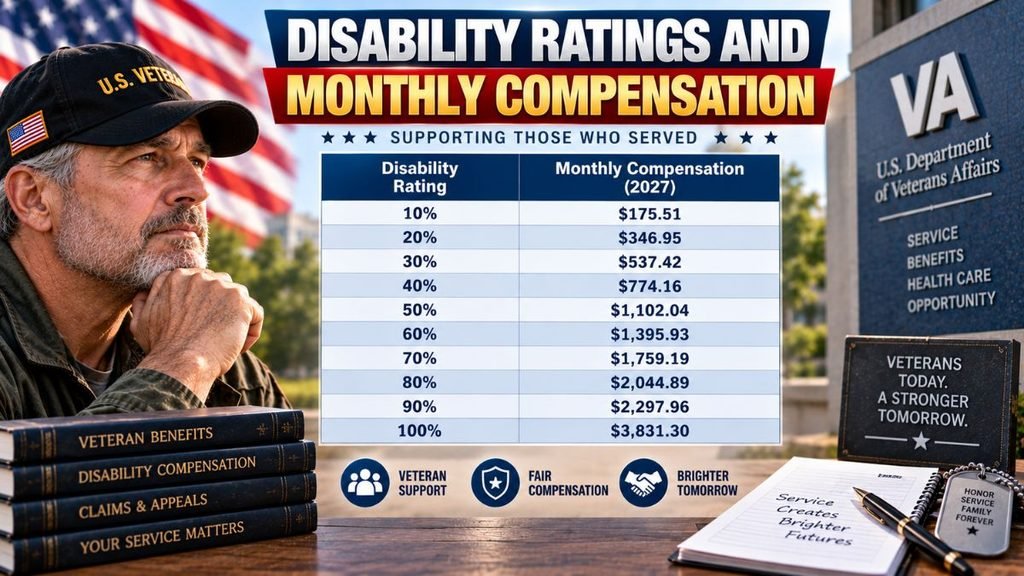
A veteran’s disability rating plays a central role in determining monthly compensation. Current VA tables provide rates for ratings ranging from 10% to 100%. At the lower ratings, dependent family members generally do not increase the basic compensation amount. Once a veteran reaches a qualifying rating of 30% or higher, however, dependent status can become an important factor in calculating the monthly payment.
Veterans with particularly severe service-connected disabilities may also qualify for Special Monthly Compensation (SMC). SMC provides additional compensation in certain circumstances involving serious disabilities or specific needs, and its payment structure is separate from the standard disability compensation table.
When 2027 Rates May Take Effect
VA disability compensation rates are generally tied to the annual COLA adjustment and are applied according to the VA’s published schedule. The current VA compensation tables became effective December 1, 2025. Once the applicable 2027 adjustment is finalized and published, veterans can use the updated VA tables to determine their new monthly payment based on their rating and dependent status.
Final Thoughts
The 2027 Military Disability Pay Chart and Rates will be particularly important for veterans planning their monthly budgets and benefits for the coming year. However, the exact 2027 dollar amounts should be confirmed through official VA information once they are released. Disability rating, qualifying dependents, and eligibility for special compensation can all influence the amount a veteran receives. Checking the official VA compensation tables is the safest way to obtain the latest figures and avoid relying on outdated or unofficial estimates.
FAQs
Q1. What determines military disability pay rates?
A1. Your VA disability rating and dependents.
Q2. When will 2027 rates be published?
A2. VA will publish official updated rates.
Q3. Can dependents increase disability compensation payments?
A3. Yes, qualifying dependents may increase payments.
VA Disability Rates Increase for 2027: Full Chart
VA disability compensation is an important source of financial support for veterans whose service-connected conditions affect their daily lives and ability to work. Each year, VA disability compensation rates are generally adjusted to reflect changes in the cost of living. For 2027, veterans and their families may be watching closely for the updated payment amounts and how they compare with the previous year. The exact 2027 rates are determined through the applicable annual cost-of-living adjustment and official VA rate tables, so veterans should check the latest Department of Veterans Affairs information when the new figures are formally released.
How VA Disability Payments Are Determined
The amount a veteran receives is not based only on whether they qualify for disability compensation. Payments depend on the veteran’s VA disability rating, dependent status, and certain other circumstances. Disability ratings generally range from 10% to 100%, with higher ratings corresponding to higher monthly compensation. Veterans with qualifying dependents may receive different amounts than veterans without dependents. Because individual situations can vary, the basic rate chart should be viewed as a starting point rather than a personalised payment calculation.
2027 VA Disability Rates Chart
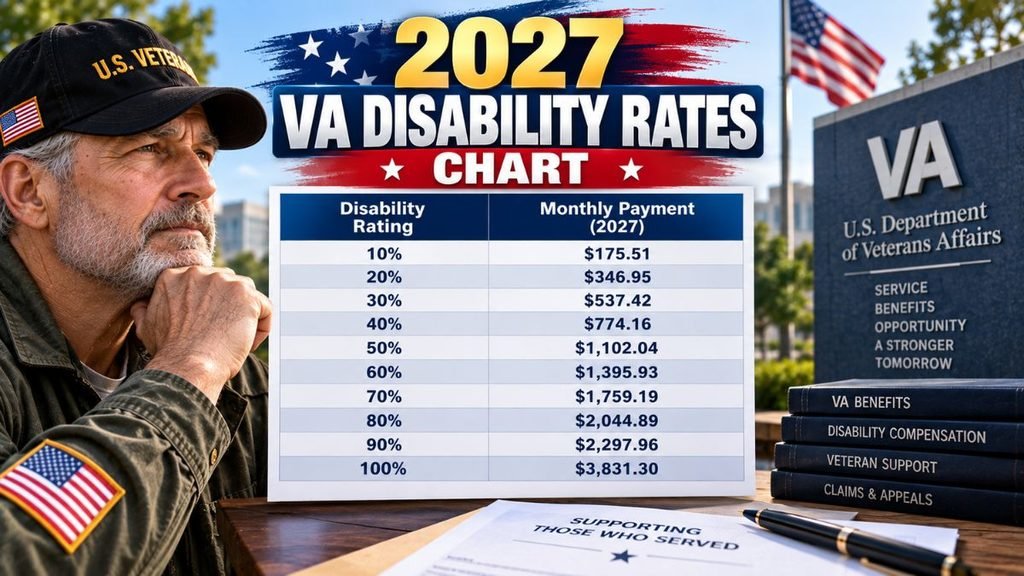
The 2027 VA disability compensation chart is designed to show monthly payment amounts according to disability rating and applicable dependent categories. Ratings commonly listed in VA compensation tables include 10%, 20%, 30%, 40%, 50%, 60%, 70%, 80%, 90%, and 100%. The payment difference between these ratings can be significant, particularly at the higher disability levels. Veterans should use the official 2027 VA compensation table once published to verify the exact dollar amount applicable to their circumstances.
Why the Annual Increase Matters
Even a relatively small annual adjustment can make a noticeable difference over the course of a year. Higher monthly compensation can help veterans manage everyday expenses such as housing, food, transportation, medical costs, and other household bills. The annual adjustment is intended to account for changes in the cost of living, helping benefits keep pace with inflation. However, the actual increase varies according to the official adjustment and the veteran’s existing compensation rate.
Checking Your 2027 Payment Amount

Veterans should rely on official VA resources when checking their 2027 compensation amount rather than unofficial charts or social media posts. The final payment can also depend on factors such as dependents, special compensation circumstances, or changes to a veteran’s disability rating. Reviewing the official VA rate tables can help veterans understand their expected monthly benefit and identify whether a change in their personal circumstances could affect their payment.
Final Thoughts
The 2027 VA disability rates increase is an important update for millions of veterans who depend on disability compensation. While the annual adjustment can provide additional financial support, the exact amount each veteran receives depends on their disability rating and individual eligibility factors. Once the official 2027 figures are available, veterans should compare their current payment with the updated rate table and use official VA information for the most accurate details.
FAQs
Q1. What is the 2027 VA increase?
A1. It adjusts payments for rising costs.
Q2. When will 2027 rates become available?
A2. Official rates are announced before payments.
Q3. Where can veterans check updated rates?
A3. Check the official VA compensation tables.